
A community recognizing itself in shared challenges
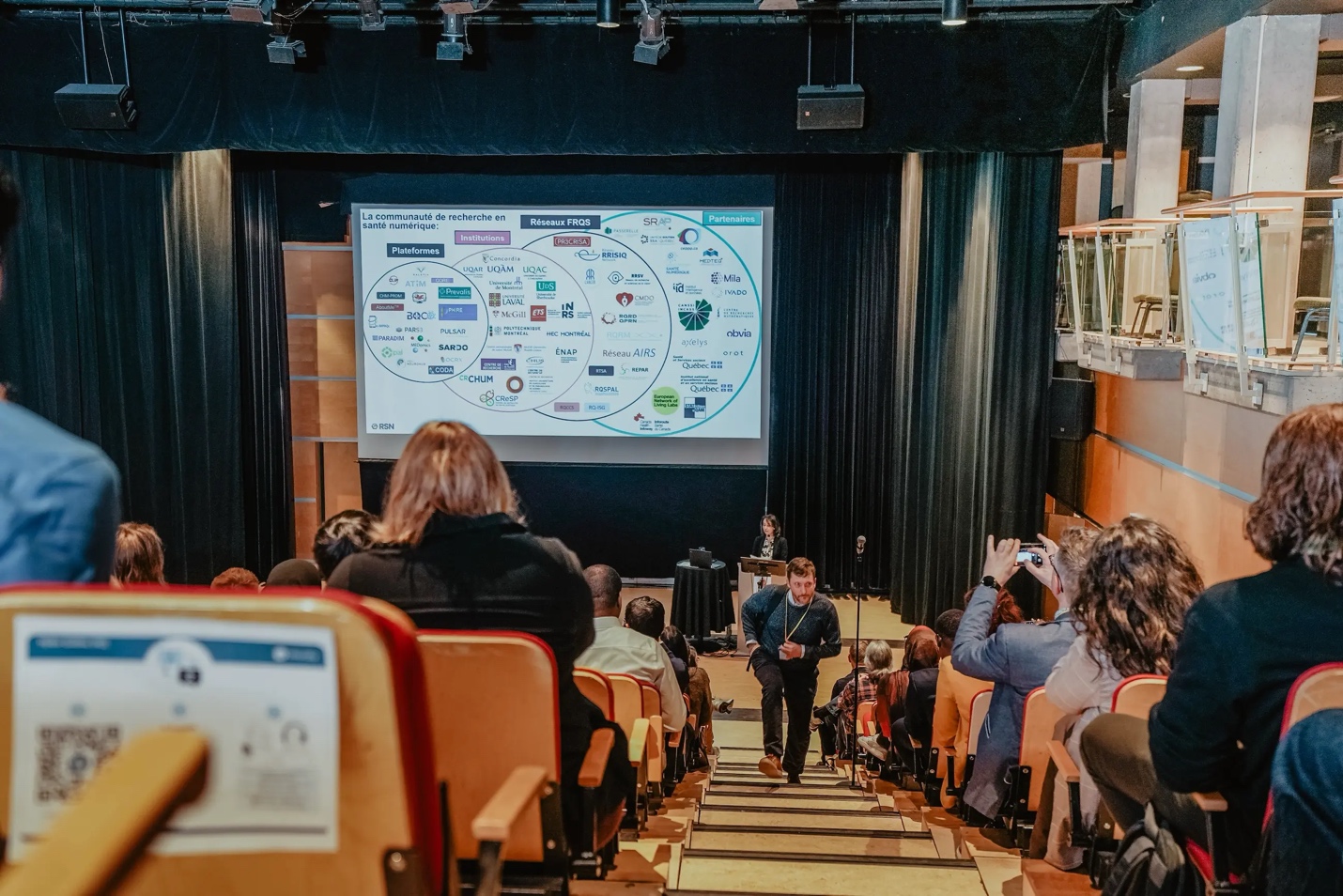
The first Scientific Days of the Réseau santé numérique (RSN) were held on March 30 and 31, 2026, at Université Laval. Bringing together researchers, clinicians, students, patient partners, managers and institutional partners, they confirmed the vitality of a community that recognizes itself in shared challenges: data access and governance, responsible artificial intelligence, and the responsible digital transformation of the health system — skills, training and literacy included.
Over two days, the program featured six international plenary lectures, nine parallel panels, three thematic sessions — including the first health Prompt-a-thon in Québec — member presentations, a poster award ceremony and RSN’s annual general meeting.
The discussions highlighted both the field’s growing maturity and the challenges that remain. They frame the work RSN intends to carry forward in the coming year.
A community that showed up
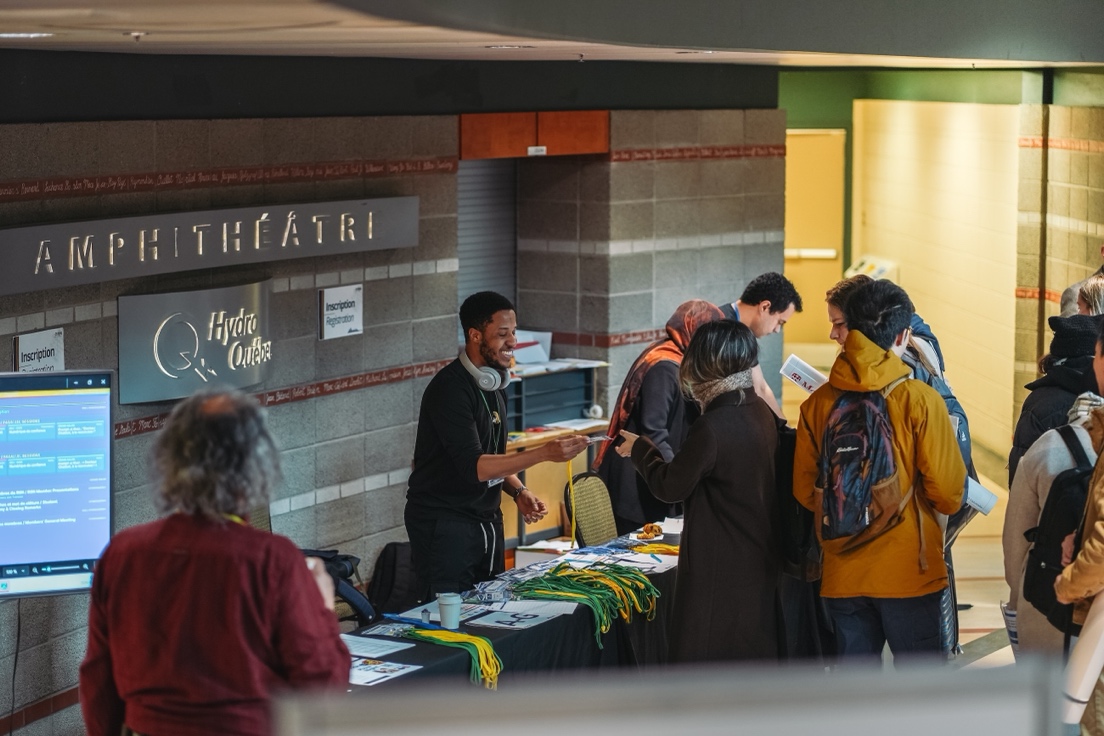
Two days, 221 participants, 129 organizations: a diverse, engaged community, a significant share of it from outside the network — a sign that RSN’s reach extends beyond its core membership.
A multidisciplinary gathering
Participant profile
An ecosystem well represented
Types of organization
- Universities 45.7%
- Research centres 18.6%
- Health institutions 14%
- Government / networks 4.7%
- Other 17.1%
International voices to anchor the Québec dialogue
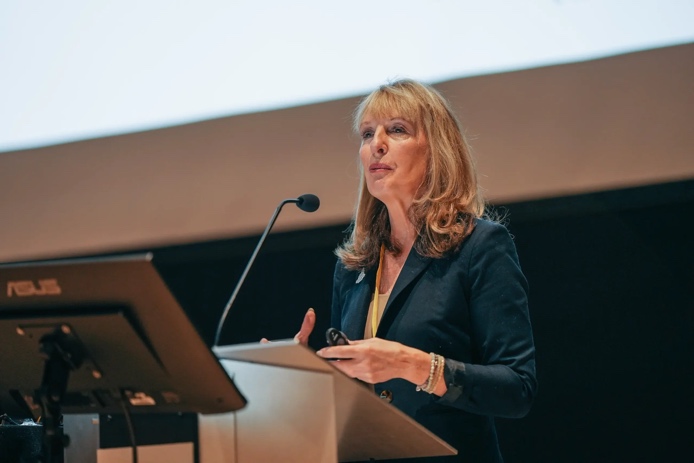
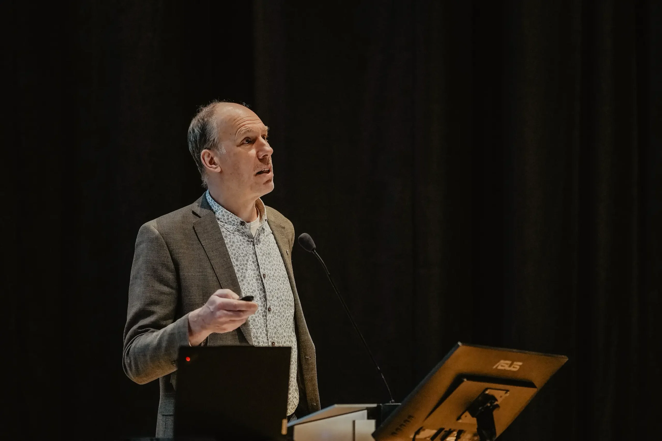
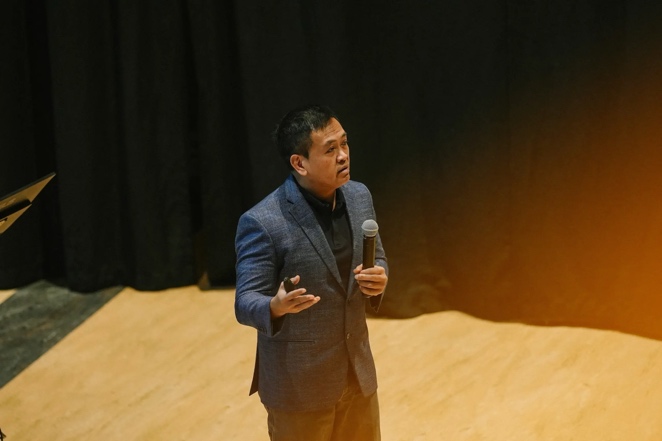
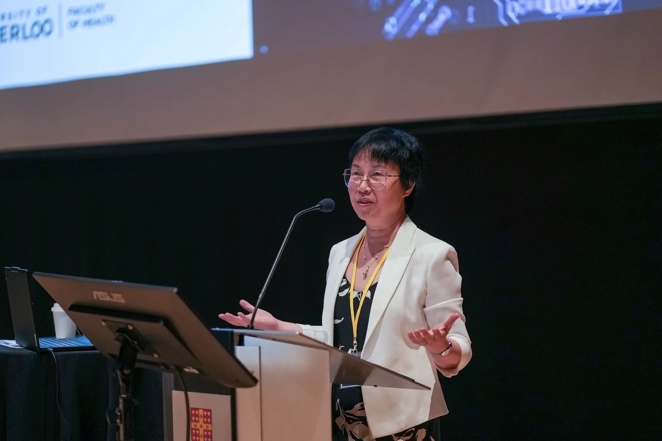
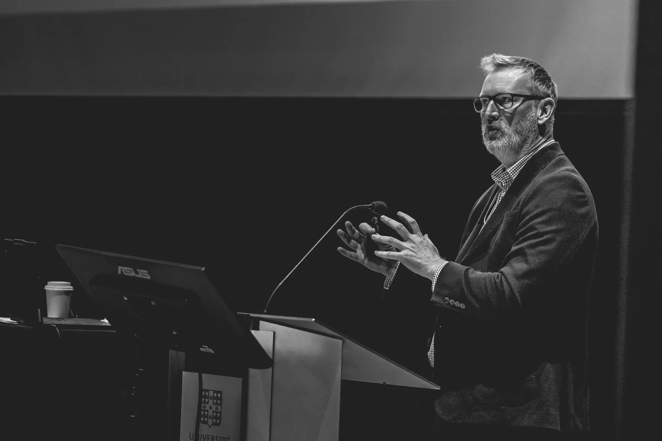
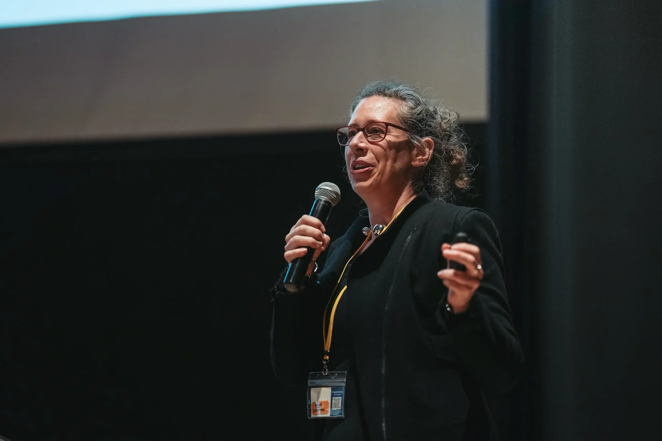
Six internationally recognized speakers whose work spans four continents — from the British NHS to low-resource health systems in Africa and Asia, to major North American universities.
A matter of rights, not only of efficiency
One finding imposed itself forcefully: the fragmentation of health data in Canada is not merely a technical problem, it is a rights problem. While citizens struggle to consult their own records, other actors access them without friction. Ewan Affleck pushed the diagnosis further: as long as provinces, professionals and academic institutions fail to adopt coherent, concerted regulation, the system will keep harming those it is meant to serve.
“Your insurance company can access your health data more easily than you can.”
— Alex Dahl
The tension between commercialization and the public good ran through the discussions on open source: Québec lacks internal expertise and reproduces vendor lock-in, while models such as Estonia’s X-Road show that sovereign national infrastructure is possible.
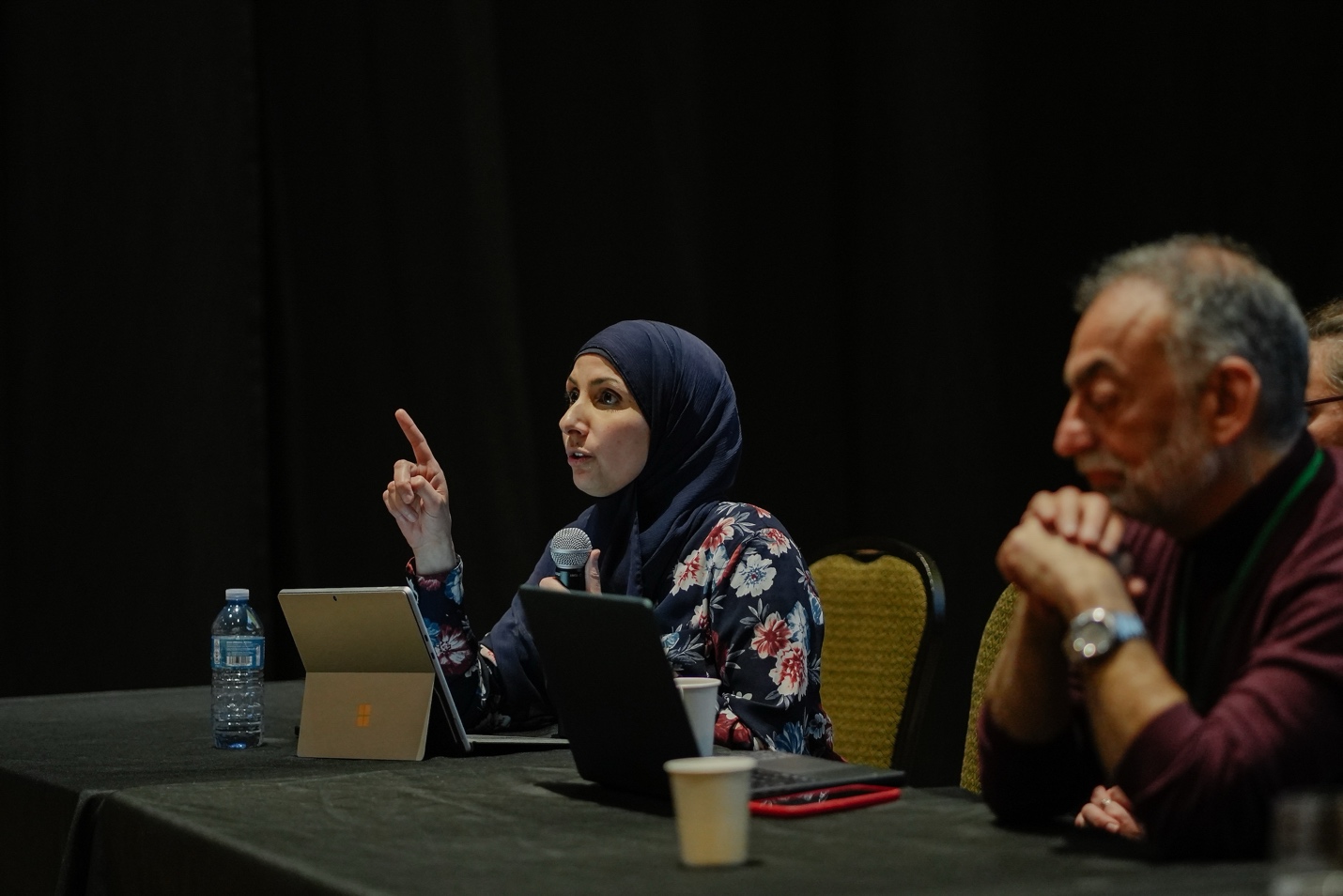
The Axis 1 workshop highlighted the glaring absence of environmental data and First Nations data in the Québec ecosystem — a blind spot now explicitly written into the nine actions of the manifesto under development, co-signed with partner networks and aligned with upcoming political milestones.
Closing the gap between research and practice
Source: Robert Abraham — orders of magnitude, to be interpreted with caution.
Beyond the figure, the reality shared by several speakers is clear: AI is advancing faster than regulatory and clinical evaluation frameworks, and that gap is becoming a major societal risk. Yet the benefits are real: generative AI scribes already in place reduce administrative burden and clinician burnout by 50 to 70 percent. The problem is not the potential, but scaling up.
In the field, Katie Gagnon’s study (90 users, 55 responses) illustrated the concrete promise — gains of 5 to 30 minutes per consultation, a preliminary ROI of $1.73 — and the friction: incomplete EHR integration, variable multilingual performance. An evaluation framework was presented as a benchmark: a solution must be integrable, maintainable, deployable, compliant and documented. Above all, implementation teams must be engaged from the design stage onward.
“A problem cannot be solved by those who created it: patients must be invited to the table.”
— Leo Celi, MIT
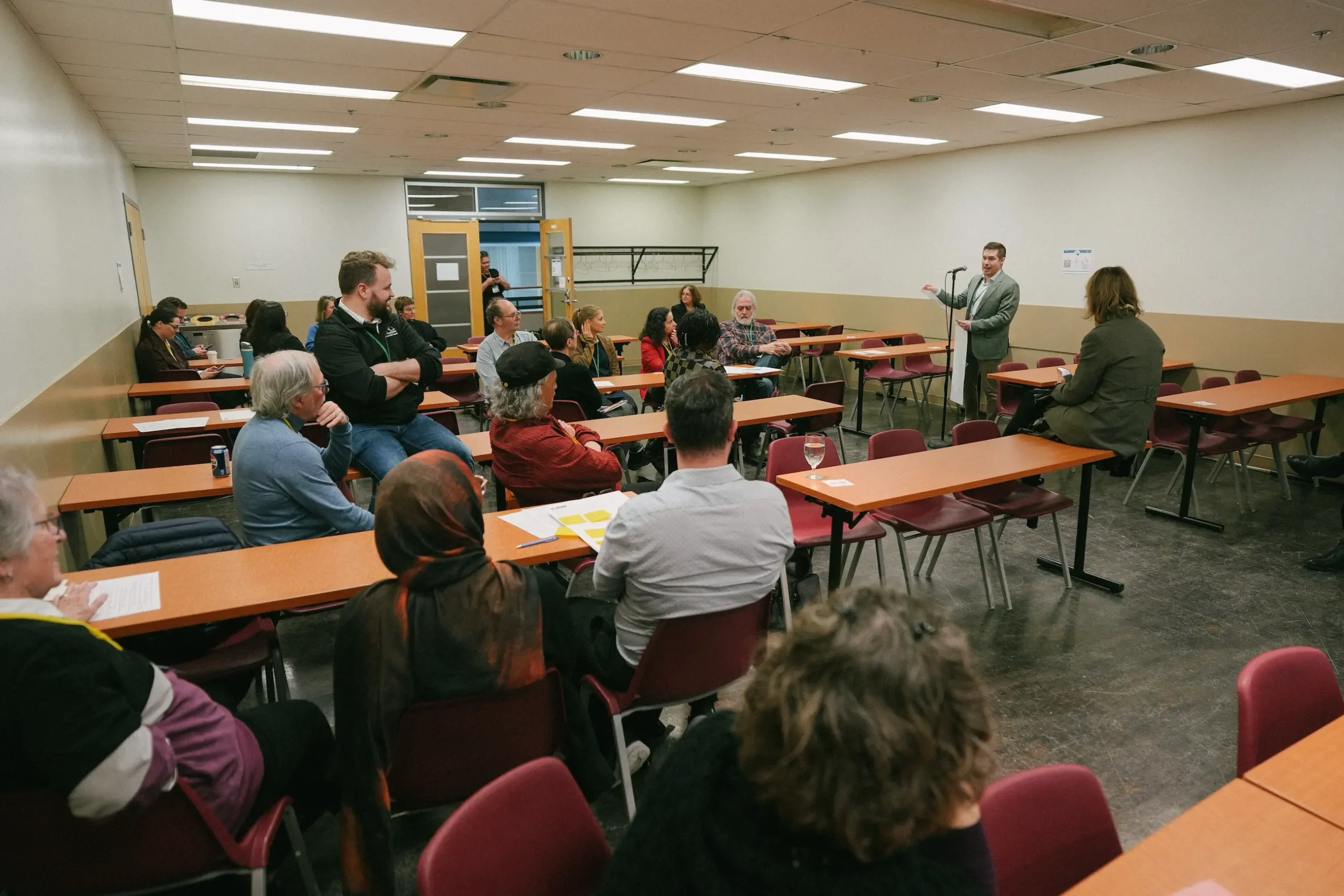
- Co-develop a local evaluation framework for AI in health
- Engage implementation teams from the design stage, not at the end of a project
- Document the reliability profiles of predictive models
- Establish formal governance for the use of AI scribes
The human conditions of transformation
Digital health is not short of technologies. What it calls for is a community able to evaluate, adapt and deploy them responsibly. From plenaries to workshops, one idea ran through both days: digital transformation is above all a human transformation.
Shelagh Maloney set out the diagnosis clearly: training pathways are progressing, but literacy at the executive level remains the weak link. Leo Celi went further, insisting on the place of patients — not as passive beneficiaries, but as active partners in design. This community under construction is also RSN’s own: more than 200 students across eight universities, active communities of practice, and developing ties with Digital Health Canada, IMIA, the WHO and the World Economic Forum.
“Peer-to-peer sharing accelerates adoption.”
— Kathrin Cresswell, University of Edinburgh
- Make patient partnership a requirement at every stage, not only in design
- Broaden the citizen committee to lay citizens and adapt the vocabulary to include immigrants and other minorities
- Support the student community and the communities of practice
- Develop the enhanced funding programs, including “From data to policy”
2026 poster awards
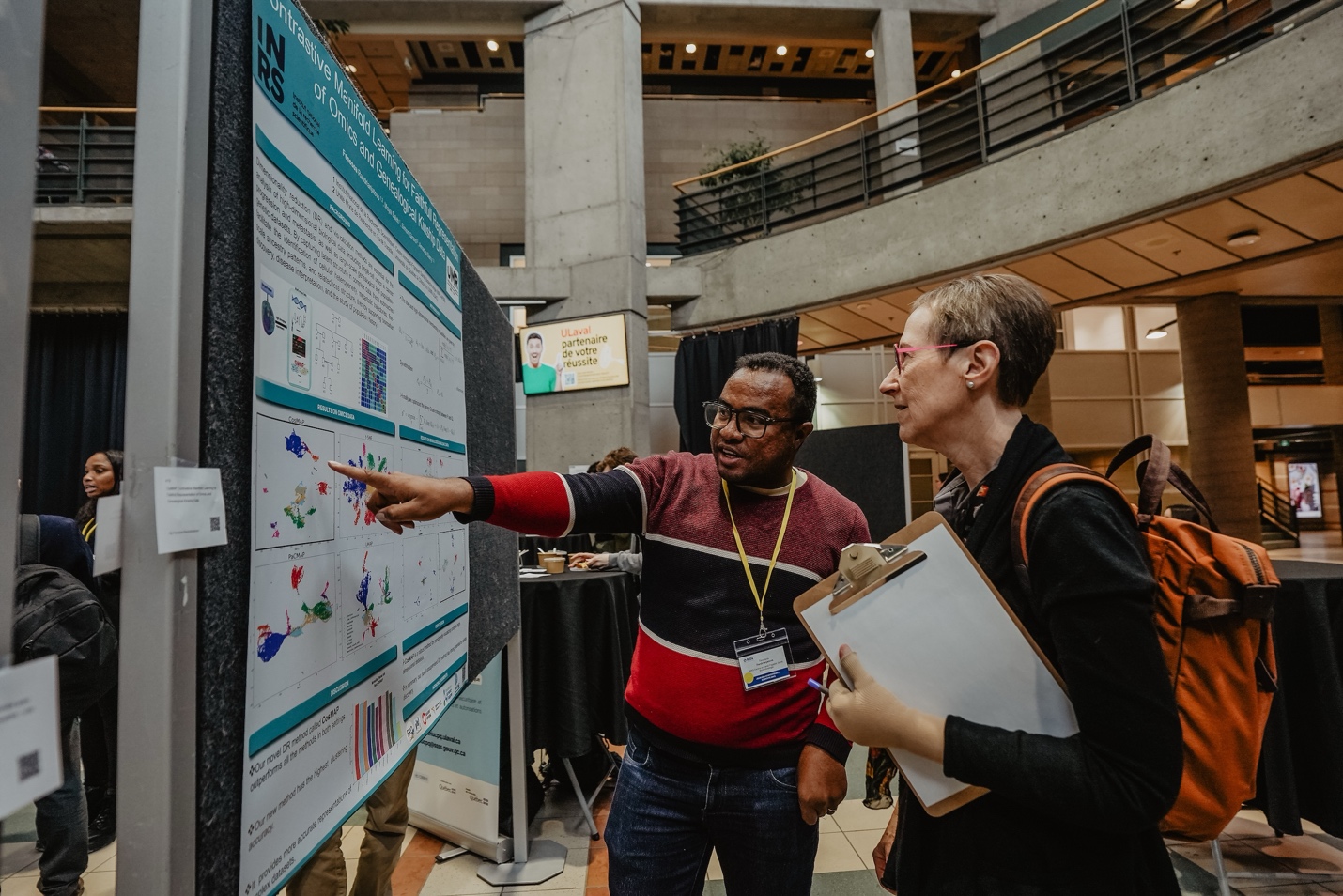
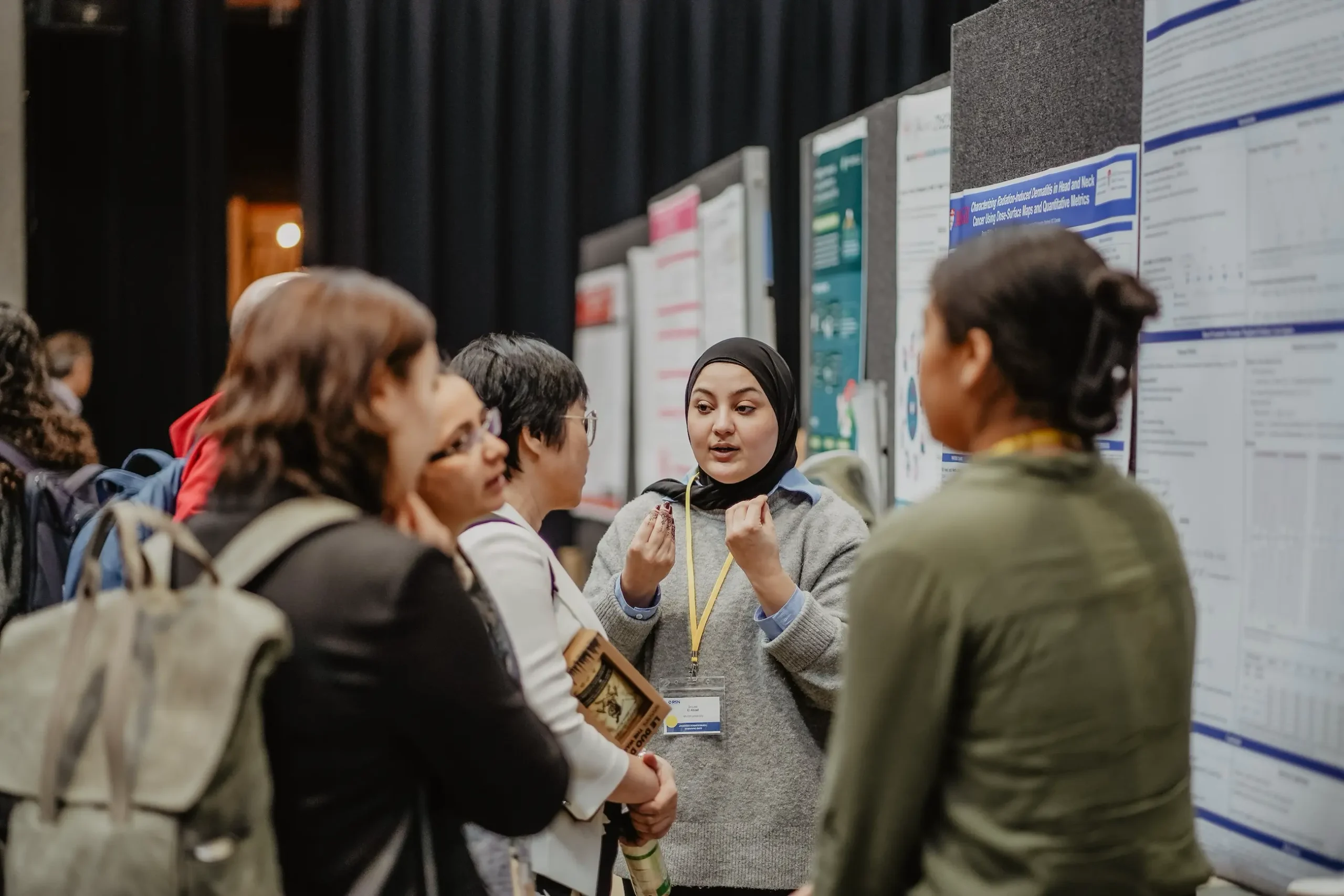
Five projects caught the attention of the jury and the audience for their originality and their clinical or social relevance.
Soutongnoma Safiata Kaboré
Edge A-Eye project: AI for indoor navigation for people with visual impairments
Nikki Petrakos
Integrating missing data into the generation of synthetic clinical trial data
Doriane Étienne
Beyond the click: measuring real exposure through confidential matching
Christine Yeargeau
Rare disease data bank in Québec
Marjorie
Public health research
“If we don’t learn to work together and to trust one another, technology will not be enough.”
— Ewan Affleck
From reflection to commitment: common threads that chart the way
Sara Ahmed closed the two days by naming what ran through every discussion: literacy and continuing education, human factors, interdisciplinary collaboration and inclusivity. Their recurrence — from international plenaries to citizen workshops — says something about their urgency, and about the maturity of a community that can now name what it is missing.
The testimony of Josée Duquette, who lives with hereditary spastic paraplegia, was a powerful reminder of why this work matters: where the care system falls short, digital tools can make a real, everyday difference — provided they are designed with the people who need them.
The annual general meeting, chaired by Martin Vallières and attended by 75 members, was the moment to look ahead to the coming year: new grants, governance reform, enhanced funding programs and a commitment to continue the work opened during the two days.
Appendices
Full program detail — expand the sections that interest you.